
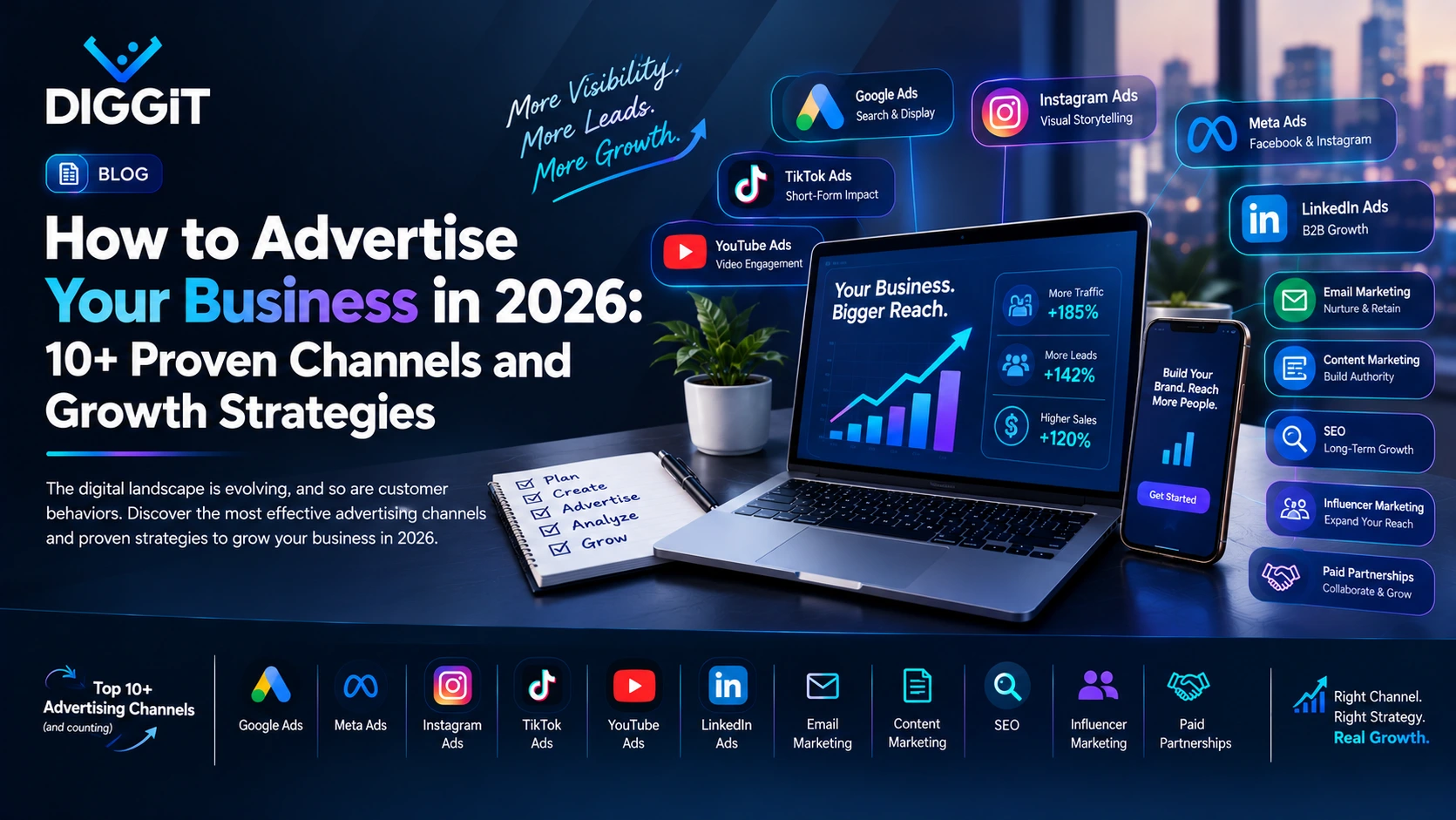
Quick answer: The best way to advertise your business is through a hybrid strategy combining high-intent paid search (Google Ads), local search engine optimization (Google Business Profile), organic social media content, and structured online directory listings. For small budgets, organic social platforms and directory listings allow you to advertise business for free while building authority. For rapid expansion, combining paid advertising with automated lead generation systems yields the highest conversion rates.
In today's fast-evolving digital market, knowing how to advertise your business effectively is the primary driver of predictable customer acquisition and revenue growth. Whether you are running an ecommerce store, a specialized B2B firm, or a regional service operation, choosing the right combination of promotional channels requires a clear understanding of buyer intent, budget, and platform algorithms.
Business owners frequently ask: What is the single most cost-effective method to advertise small business services without wasting capital? The reality is that relying on one single channel creates vulnerability. Instead, the top ways to advertise your business involve a balanced ecosystem, combining long-term organic visibility, immediate paid client acquisition, and reliable automated conversion pipelines.
In this complete SEO and search engine guide, we will break down both paid and unpaid growth channels, giving you an actionable roadmap to scale your brand.
Modern Digital Channels: How to Advertise Small Business Online
To advertise small business online with maximum ROI, you must connect with prospective customers at the exact moment they express commercial intent. Digital marketing generally falls into two categories: push marketing (placing your message in front of active scrollers) and pull marketing (capturing people who are actively searching for solutions).
How to Advertise Your Business on Google
Learning how to advertise your business on google is essential because Google handles over 8.5 billion searches every day. To secure page-one visibility, combine two distinct approaches:
- Google Search Ads (PPC): Bidding on transactional keywords places your brand at the very top of search results instantly, targeting users ready to buy.
- Google Maps & Local SEO: Setting up and optimizing a Google Business Profile ensures your company ranks in the "Local 3-Pack" map results when prospects search for services near them.
How to Advertise Your Business on Social Media
When analyzing how to advertise your business on social media, focus on the platforms where your ideal customers spend their screen time. B2B service providers find the highest conversion rates on LinkedIn, whereas visual B2C products perform best on Instagram, TikTok, and Facebook.
Effective ways to promote your business on social media include:
- Short-Form Video Content: Reels, TikToks, and YouTube Shorts deliver significantly higher organic reach than text or static image posts.
- Automated Sales Funnels: Connecting social advertising to custom software development and automation services enables instant lead capture, automated SMS/email follow-ups, and 24/7 AI chatbot interactions.
- Retargeting Campaigns: Serving tailored ads to users who previously visited your website keeps your brand top-of-mind until they convert.
Free Channels: How to Advertise My Business for Free
If you are launching on a lean budget, you are likely asking: how to advertise my business for free? Or specifically, where to advertise my business for free on the web? Building initial traction without ad spending is entirely realistic when you optimize digital directories, search engines, and earned media assets.
When your goal is to advertise my business online for free, your foundation lies in directory consistency and domain citations. Below is a detailed checklist of 10 free advertising sites every company should claim immediately:
- Google Business Profile: The single most important platform for local mapping, calls, and collecting customer reviews.
- Bing Places for Business: Captures search traffic from Microsoft ecosystem users and default desktop setups.
- Yelp for Business: Highly impactful for restaurants, retail, and local home service contractors.
- Facebook Business Page: Gives your brand organic social proof, community reach, and messaging accessibility.
- LinkedIn Company Page: Builds enterprise trust, B2B networking connections, and employer branding.
- Apple Maps Connect: Essential for reaching iPhone, Apple Watch, and Siri voice-search users.
- Nextdoor: Direct neighborhood networking that connects local service providers with homeowners.
- Trustpilot: A high-authority platform for verified customer reviews that improves organic search trust metrics.
- YellowPages (YP.com): A classic directory passing valuable foundational backlinks and local NAP (Name, Address, Phone) citations.
- Craigslist / Local Online Classifieds: Useful for promoting immediate localized promotions, service calls, and deals.
By leveraging these platforms, you can advertise business for free while creating a widespread web footprint that search engine crawlers reward with higher organic rankings.
Local Channels: How to Promote Your Business Locally
For physical store locations, regional contractors, and local service professionals, winning your local market builds a defensible competitive advantage. Mastering how to promote your business locally requires matching physical community involvement with hyper-targeted digital signals.
If you want to know how to advertise a small business locally, prioritize NAP consistency across all public platforms. Search engine algorithms compare your business credentials across hundreds of databases; uniform details signal trust and drive higher map pack placement.
Proven strategies for how to promote your business locally for free include:
- Local Community Group Participation: Actively answering questions in local Facebook groups, subreddits, and neighborhood forums without aggressive pitching.
- Cross-Promotional Partnerships: Partnering with non-competing businesses nearby to swap email newsletter features or package services together.
- Localized PR and Press Releases: Distributing press announcements for local sponsorships, charity drives, or store grand openings to earn high-authority regional news links.
Strategic Channel Comparison: Finding Your Optimal Mix
To help you decide where to dedicate your budget and effort, the table below compares the primary ways to advertise your business across key performance indicators:
| Advertising Channel | Cost Level | Time to First Lead | Best Suited For | Primary Metric to Track |
|---|---|---|---|---|
| Google Search Ads (PPC) | High | Immediate (Hours) | High-intent prospective buyers & urgent service needs | Cost Per Acquisition (CPA) |
| Local SEO & Google Maps | Low to Medium | 2 to 6 Months | Local stores, service technicians & regional clinics | Map Pack Views & Direct Calls |
| Social Media Advertising | Medium | Fast (1 to 3 Days) | Brand awareness, visual products & direct B2C sales | Return On Ad Spend (ROAS) |
| Free Business Directories | Free | 1 to 3 Months | Building base domain authority & local citations | Referral Clicks & Citation Accuracy |
| SEO Content Marketing | Low to Medium | 3 to 9 Months | Long-term organic lead flow & authority building | Organic Traffic & Keyword Ranks |
Frequently Asked Questions (FAQ)
The best approach depends on your sales cycle and budget. For rapid, immediate lead generation, running Google Search Ads yields the fastest return. For long-term growth with declining customer acquisition costs over time, combining search engine optimization (SEO) with a custom modern website built by Diggit Global provides the highest multi-year ROI.
Focus your resources on the platforms where your target audience conducts research. B2B enterprises perform best on LinkedIn, specialized industry media, and Google Search. Consumer-focused B2C brands experience greater engagement on Instagram, TikTok, Meta, and local search apps.
The top places to advertise your business without ad expenditure are Google Business Profile, LinkedIn, Nextdoor, Yelp, and industry-specific directory sites. Additionally, creating informative YouTube guides and publishing SEO-optimized articles on your own blog creates permanent lead-generating assets.
Conclusion: Building a Scalable Growth Engine
Ultimately, the best way to advertise a small business is not relying on a single traffic source, but constructing an integrated digital pipeline. By securing free directory listings, engaging with your local community, and scaling up paid digital ad campaigns as cash flow expands, you establish a resilient, predictable acquisition model.
Start by executing high-return, low-cost foundations: claim your directory listings, optimize your web pages for target search terms, and maintain an active digital footprint. Reinvest your initial profits into automated lead management and scalable search ads to outpace competitors in 2026 and beyond.